
Garden Design Tips for a New Build Garden
I’ve quoted for a number of new build gardens in Warwickshire - I love designing them as you get to start with a complete blank canvas. Common issues and challenges crop up - here are the top five I’ve found and how to deal with them:
No Privacy
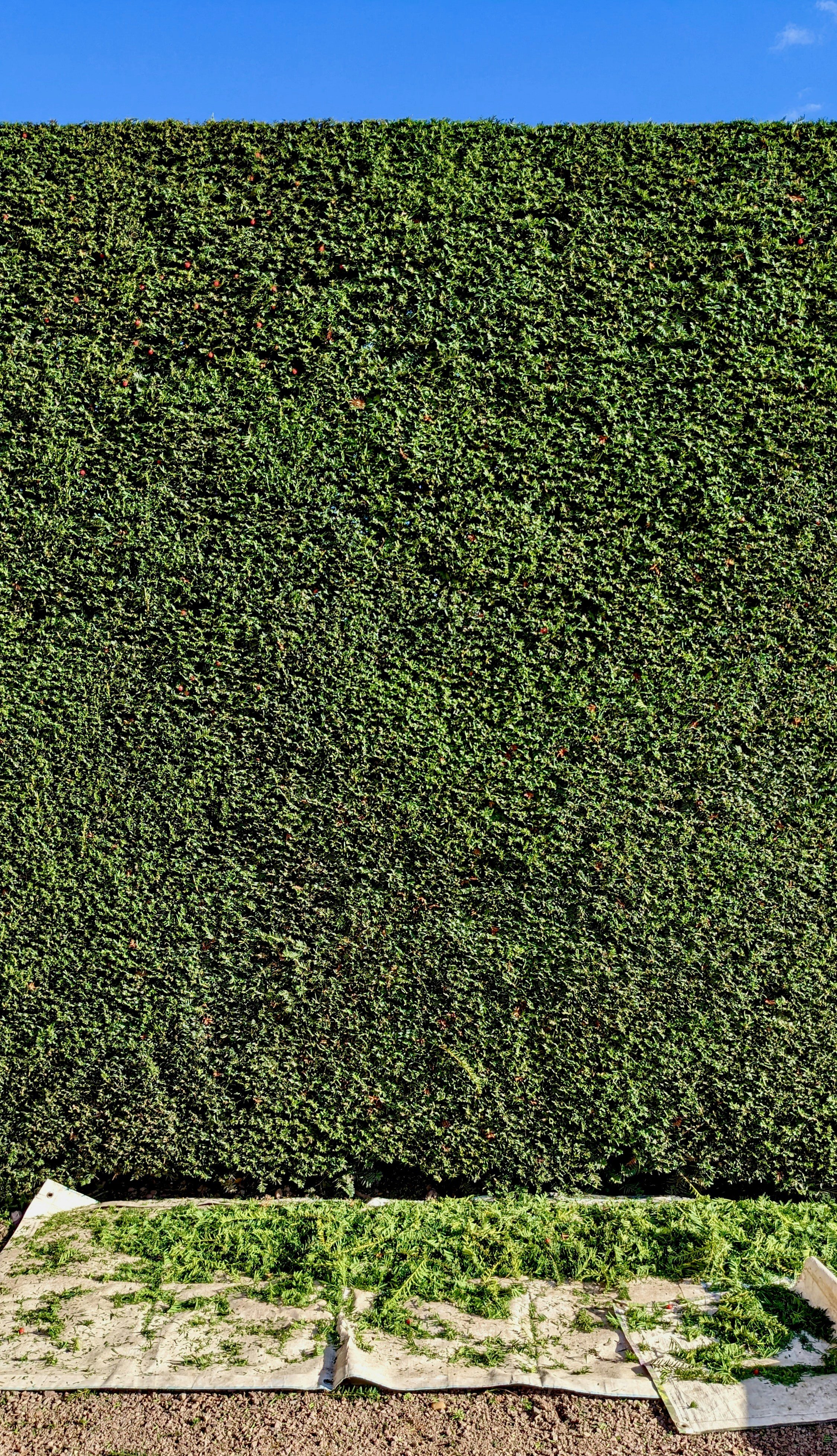
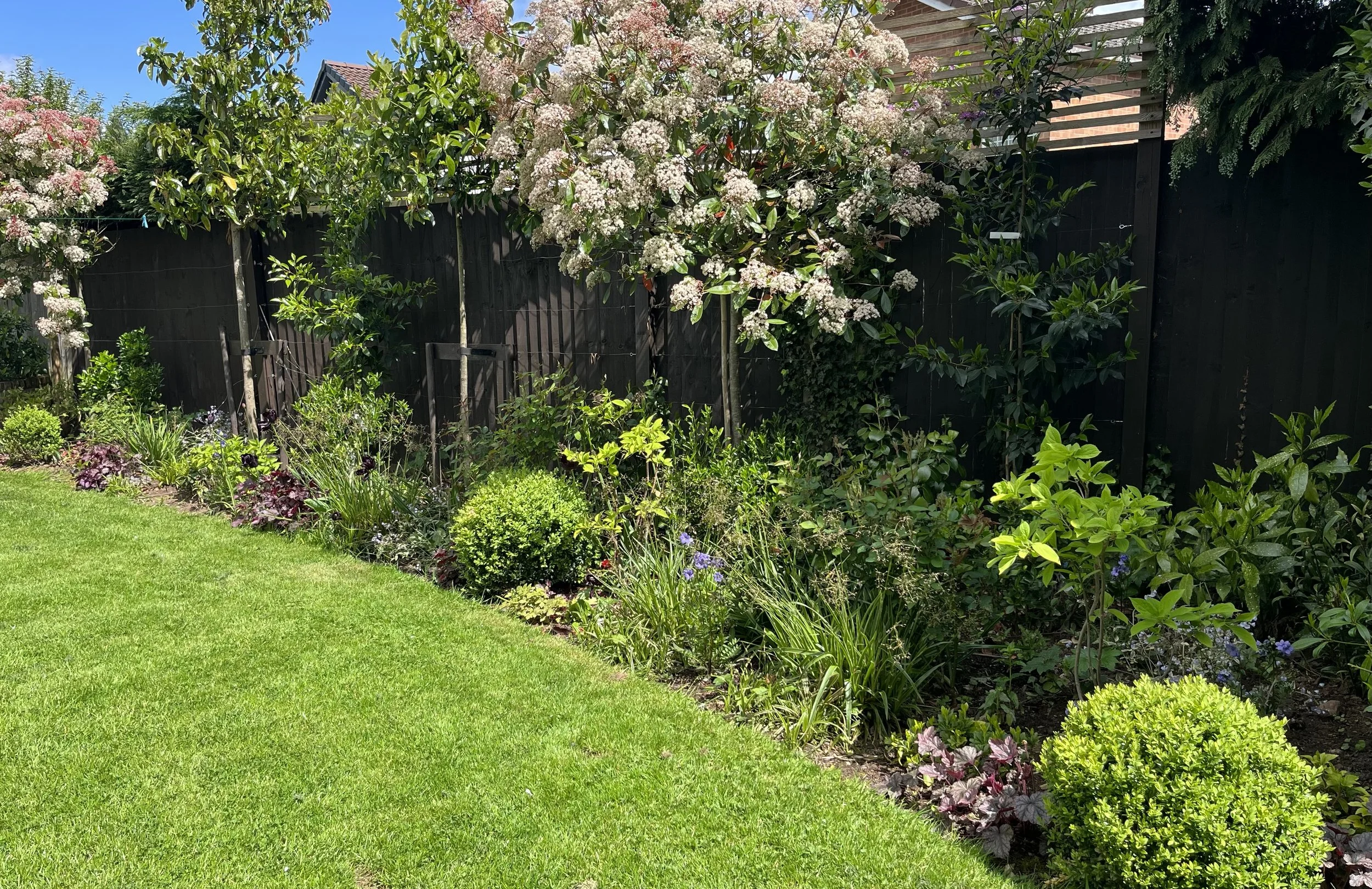
New build gardens tend to be overlooked from all sides, leaving you with that goldfish bowl feeling. It can be tempting to plant quick growing leylandii or laurel hedges around all the edges but these dense hedges take up a huge amount of space in a small garden and will outcompete all other plants for nutrients, water and light. Instead try and be selective with screening. Consider, for example, introducing a structure such as a pergola over your main seating area to create privacy where you most value it. Seating areas can also be surrounded by raised beds and tall planting to create a lush private space. Live in the property for a while and work out which neighbouring windows really bother you and introduce evergreen screening trees in that area. It also works well to bring planting, including trees, more centrally into the garden to create little private areas and distract from the surrounding views. This approach creates a much softer, open feel to the garden avoiding the imposing, closed wall feeling that tall, dark hedges can give.
2. Weird Shape
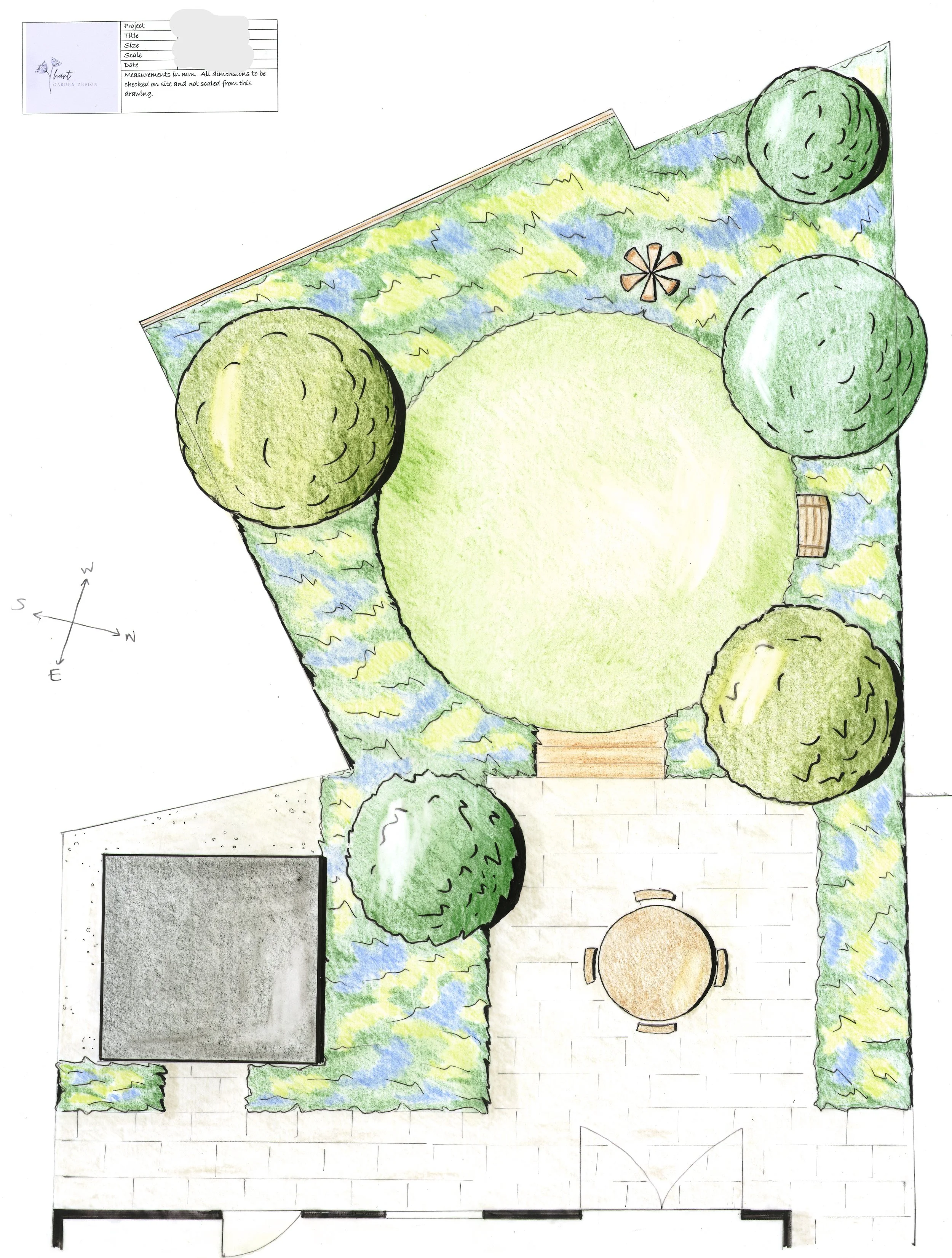
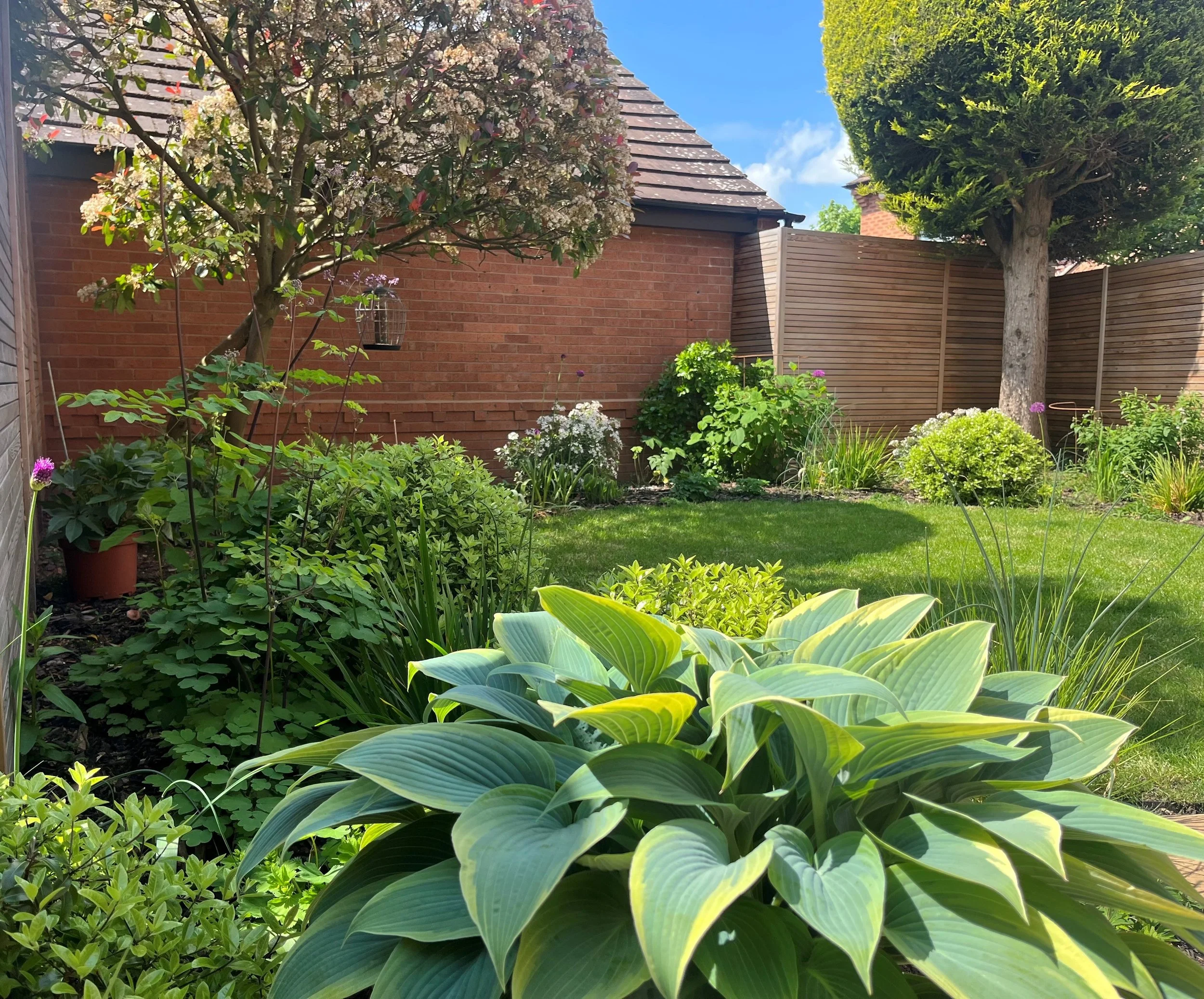
The segregation of space on new build estates can often leave gardens that are an awkward or unusual shape. The key here is to remember you are not dictated by your boundaries. Planting all pushed against the fence lines just draws your attention to them. If you have a triangular shaped garden, consider introducing a strong counter shape into the garden - a central circular lawn for example. Planting beds fill in the points of the triangle and your eye can’t easily see where the boundaries start and finish.
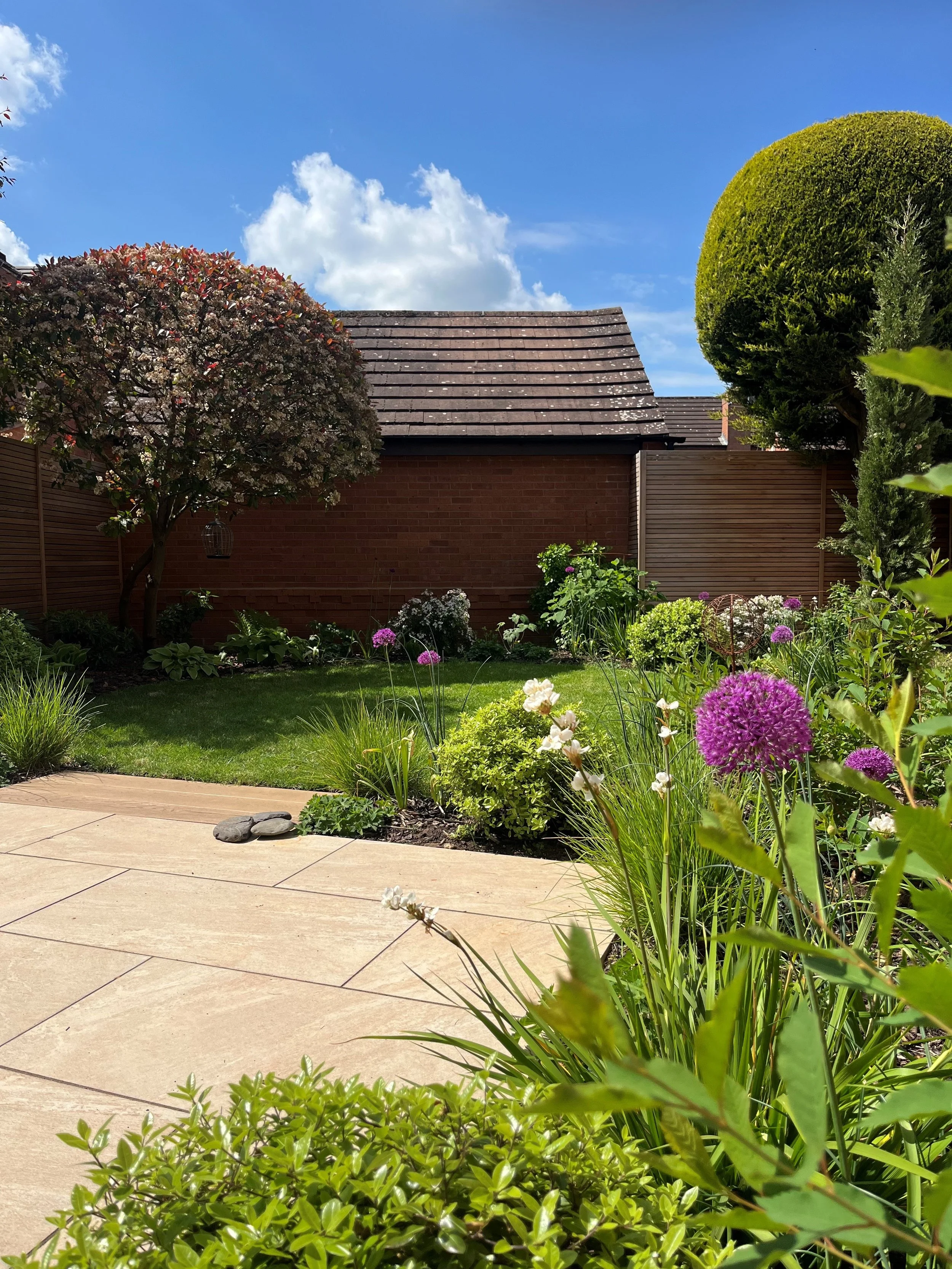
The garden in the images below demonstrates this concept - the central lawn and patio create usable space and focus the eye. The planting fills in the more awkward shapes in the garden.
3. Tiny Patios
Property developers always put a tiny patio directly outside the back door of the house and then lawn the rest of the garden (or leave it as mud)! The patio is always too small to be useful and often in the wrong place (i.e. if the back of the house in north facing, the patio will be in the shade all day).
So don’t feel like you are stuck with the existing patio. For most people, the best spot for their main seating area is in a South West facing position - an area that will capture the afternoon and evening sunlight. If this is next to the house, you could extend the patio - developers can often tell you the make of the slabs (but beware different batches can vary a little in colour). If the sun is at the far end of the garden then build a new patio here, with a path leading to the back door.
How Big Should My Patio Be?
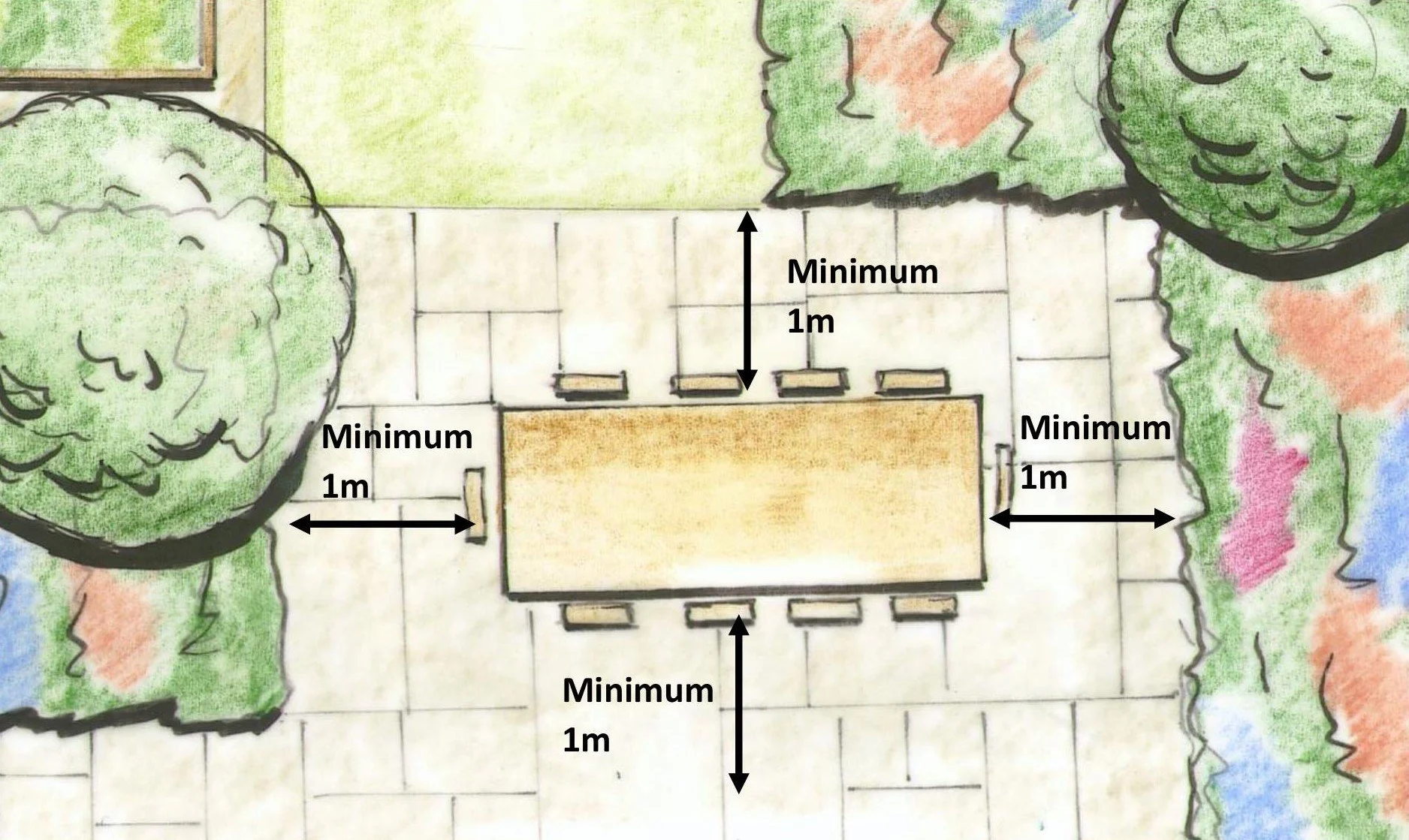
To calculate how big your patio needs to be, first work out the size of your table (i.e. for 4 or 6 or 8 people) - retailers provide dimensions on their website. Add 1 metre to all four sides of the table size, giving you sufficient clearance to pull chairs out and move around the space. These are your minimum patio dimensions.
4.Walls
New builds typically have one boundary as a brick wall - usually a neighbouring garage. Brick can be a real advantage in a garden - it’s a material that retains heat from the sun during the day, and then slowly radiates out during the night. It is therefore often a great feature near which to plant, including more tender plants. Fruit trees will love growing near to a brick wall, and furniture can be placed close it for a warm evening seating spot. Try adding wires to the wall and grow climbing plants up and across - roses are my favourite but look at climbing hydrangeas for a shady, north facing wall (see the image below). You’ll just need to get a neighbours permission to attach anything to a wall that does not belong to you.
5 Poor Soil
I’ve dug all sorts out of new build gardens - bricks, rubble, glass bottles. To be honest, its really annoying, slack building practices creates loads of extra work when its time to plant. You have two options: 1) Dig down deeply into the soil and remove all of the rubbish and then add lots of fresh topsoil and compost or well rotted manure. This step is absolutely essential and although its hard work, its 100% worth it when the plants flourish. 2) Build upwards and create raised beds, filling them with topsoil and compost or manure. Both options create nutrient rich, well drained soil that are essential for most plants.
New build gardens can be beautiful, nature filled private spaces with a little design and some patience. If you live in the Warwickshire area and you don’t know where to start with your new build then please do get in touch.