
Constantly watering your garden? Try these tips to cut down your workload.
There is no getting away from the fact that our climate is changing. Hot and dry is the new norm and gone are the days of a reliably damp British summer. So much extra work has to go into watering to keep plants alive - sometimes I find this a nice relaxing evening activity but other times it’s just an absolute pain. So I’m trying to adapt the garden to work with the weather - the following are all the techniques I’m using in my garden and with my clients.
1. Mulch
My top recommendation is to apply mulch to your garden. Mulching just means adding a thick layer of any organic matter on top of the soil - it could be compost, well rotted manure, wood chippings etc. This is a great job to do in the first nice days of spring, when we are all keen to get back out into the garden and feel those early rays of sun! Buy in some organic matter and spread a thick layer (5cm) onto any bare soil, avoiding any newly emerging plants and the woody stems of trees and shrubs. That’s it - you don’t need to dig it in and you only need to mulch once a year or even every other year. This mulch layer suppresses weed growth and locks all that lovely winter moisture into the ground below. Over time the worms will slowly incorporate the mulch into your soil, improving soil quality and structure, which again helps with moisture retention. For my clients, I tend to use a composted bark - light to use, great for improving the structure of clay soil and it makes the borders look really neat. At my allotment, I use a product called Strulch - its a brown straw material so doesn’t look as attractive but it’s very light, so there is no heavy lifting, and I find it does a great job of repelling slugs.
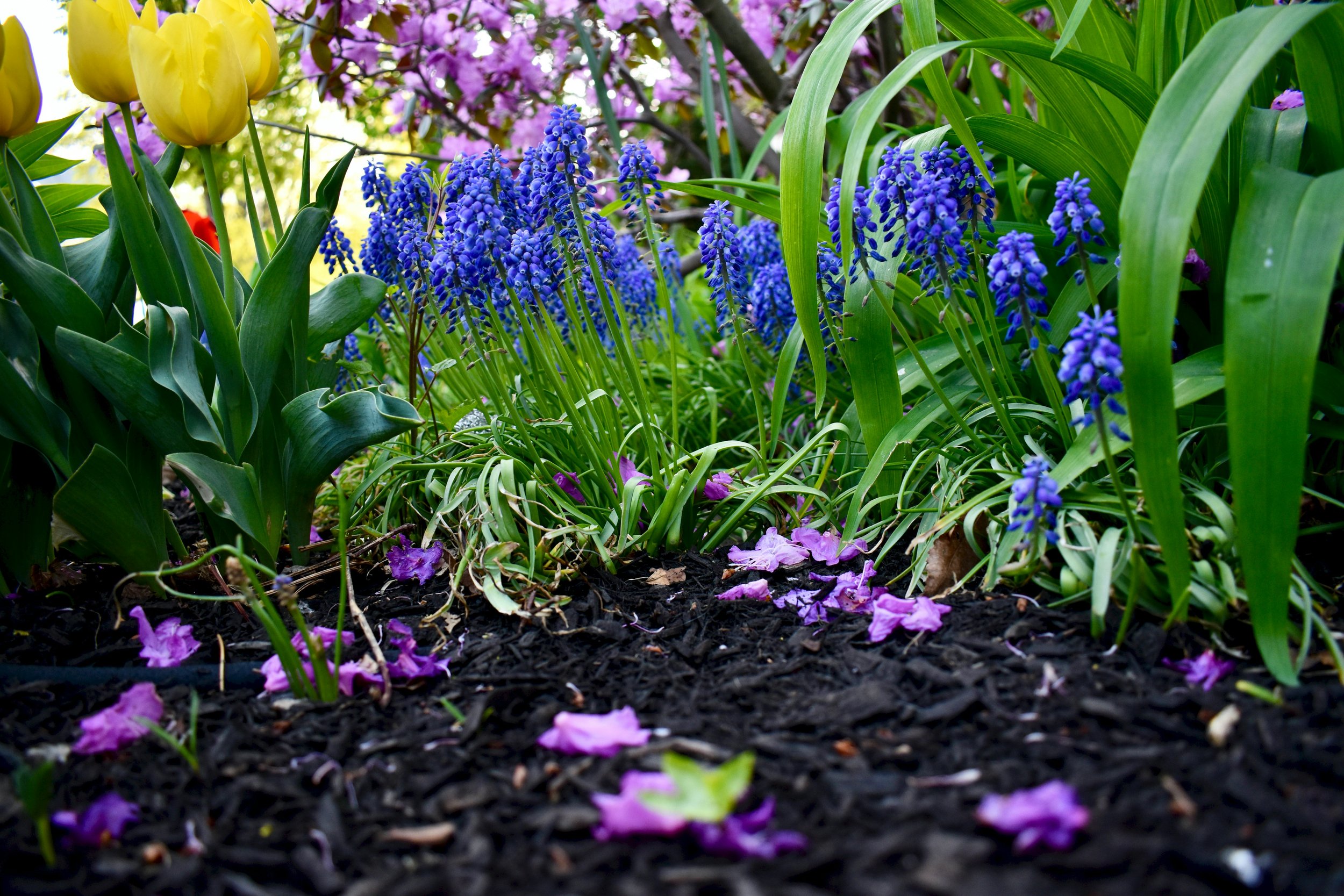
Newly mulched border
2. Plant densely
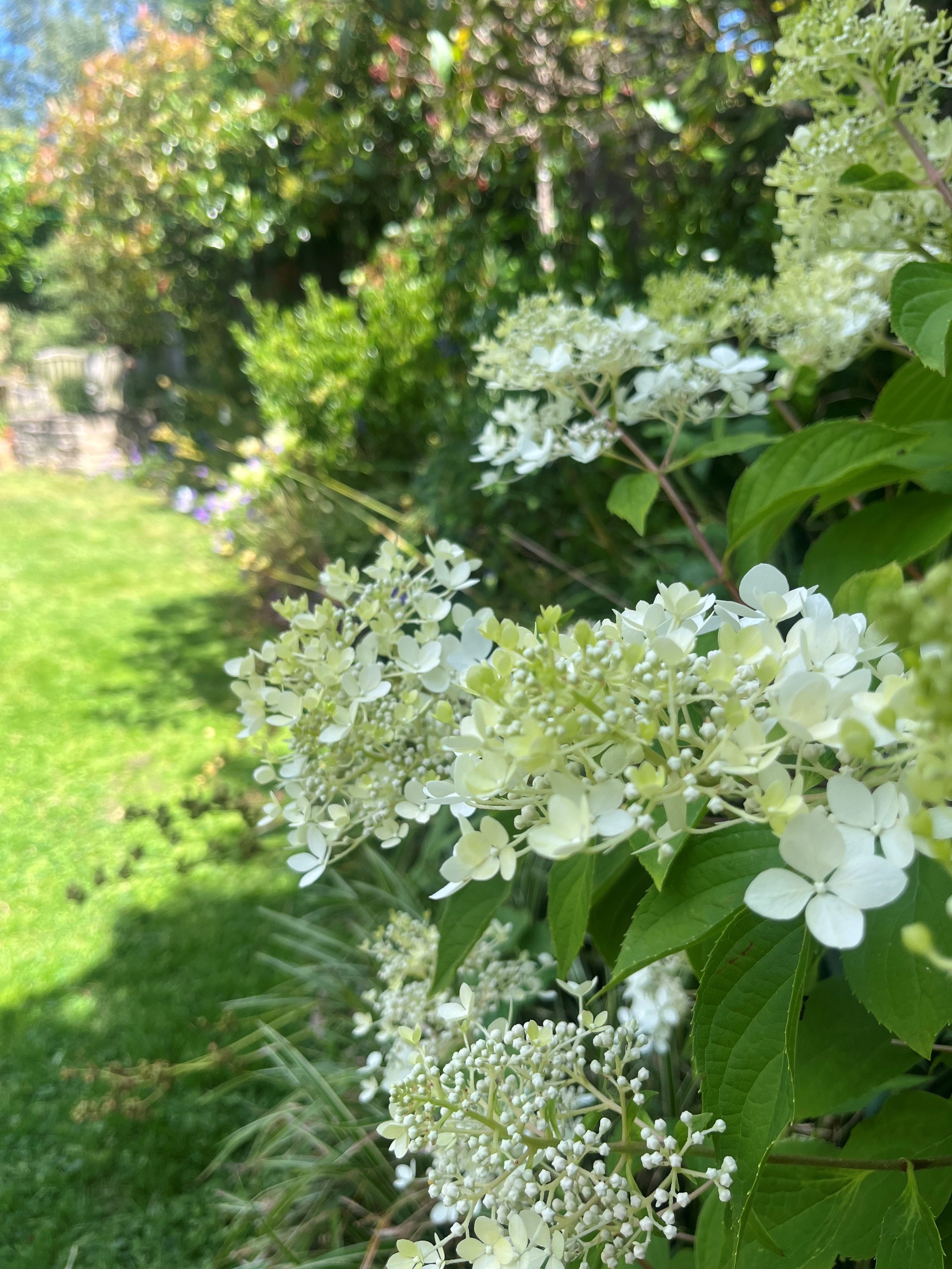
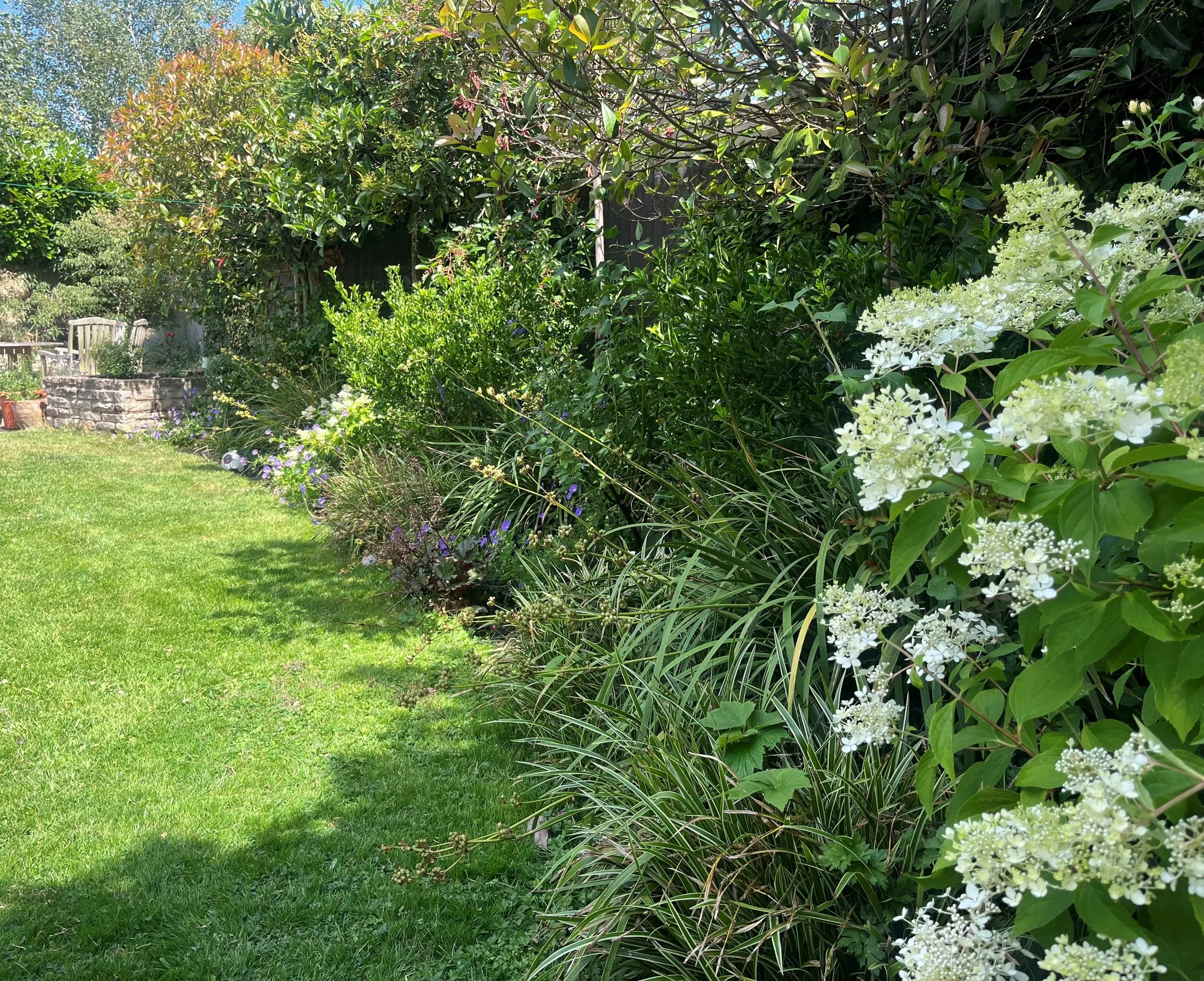
The lowest maintenance border in my garden is the most densely planted - it faces my glass doors so I want it to look good all year round. I’ve planted it in layers - trees, shrubs, grasses and perennials and it has lots evergreens for greenery in winter - there is barely any bare soil. Many plants are in the dappled shade of their taller neighbours, cutting down the strong sun exposure. Very little moisture is lost from the soil as its completely covered by foliage, which also helps crowd out the weeds. So fill the borders, just making sure you leave enough space for each plant to grow. Make evergreen shrubs and grasses a good proportion of your planting scheme.
3. Ditch the pots
I know pots are sometimes necessary - if you are renting or have an area of hardstanding that can’t be changed. However, if you have the choice, plant directly into the ground. Container soil loses moisture quickly and they need constant attention in hot weather. Very little rainwater reaches the soil as plant foliage creates an umbrella effect. Plants in containers are just all round hard work - they need feeding regularly in the summer months and any larger shrubs or trees will need transferring to larger pots as they grow or their roots trimmed. If you have to go for a pot, make it large, which will hold water better than a small pot. Cluster pots together in groups to cut down the exposure to the sun and I find plastic pots retain water much more effectively that terracotta.
4. Plant in the autumn
I plant almost everything in autumn. The soil is still warm from summer but the weather is cooling down and the rain is picking up. So the plants are under much less stress, they can rapidly grow roots and establish well. This advice applies to trees, shrubs and perennials. You’ll need to water a bit to get started but the autumn / winter weather mostly does the job for you. And then by the time summer arrives, the plants have a strong root system that can find and take up water from the ground much more effectively,
There are a couple of exceptions - annual / bedding plants need to go in in spring or summer (but if what you are looking for is less work, I’d would ditch anything that needs to be replaced each year). Plants that are slightly more tender should go in in spring to avoid the shock of low temperatures soon after planting - so a couple of examples that I plant in spring are the climber Star Jasmine and Agapanthus.
5. Water the roots
If you water your plants from overhead, the majority tends to fall on the foliage and quickly evaporates. Where possible, direct your hosepipe / watering can at the very base of the plant, where it meets the soil, allowing it to reach the roots quickly. Many gardeners are starting to add drip irrigation systems to their garden - black flexible pipes that wind through planting beds and are easily concealed by the foliage. The pipes slowly leak out water to where its needed most, making it the most efficient way of watering your garden. The whole system can be connected to a timer so there is very little for you to do. You can even buy timer systems that are controlled from your phone or other systems measure the moisture levels of the soil, only turning on when it starts to dry out. I think they are a great investment - they save a huge amount of work and the price is not prohibitively expensive. Other important watering tips are to water in the evening, allowing the plants to take up the maximum amount of water in the cooler overnight period. Try also to water less regularly, but for longer - a long soak every third day is better than a light sprinkling each night.
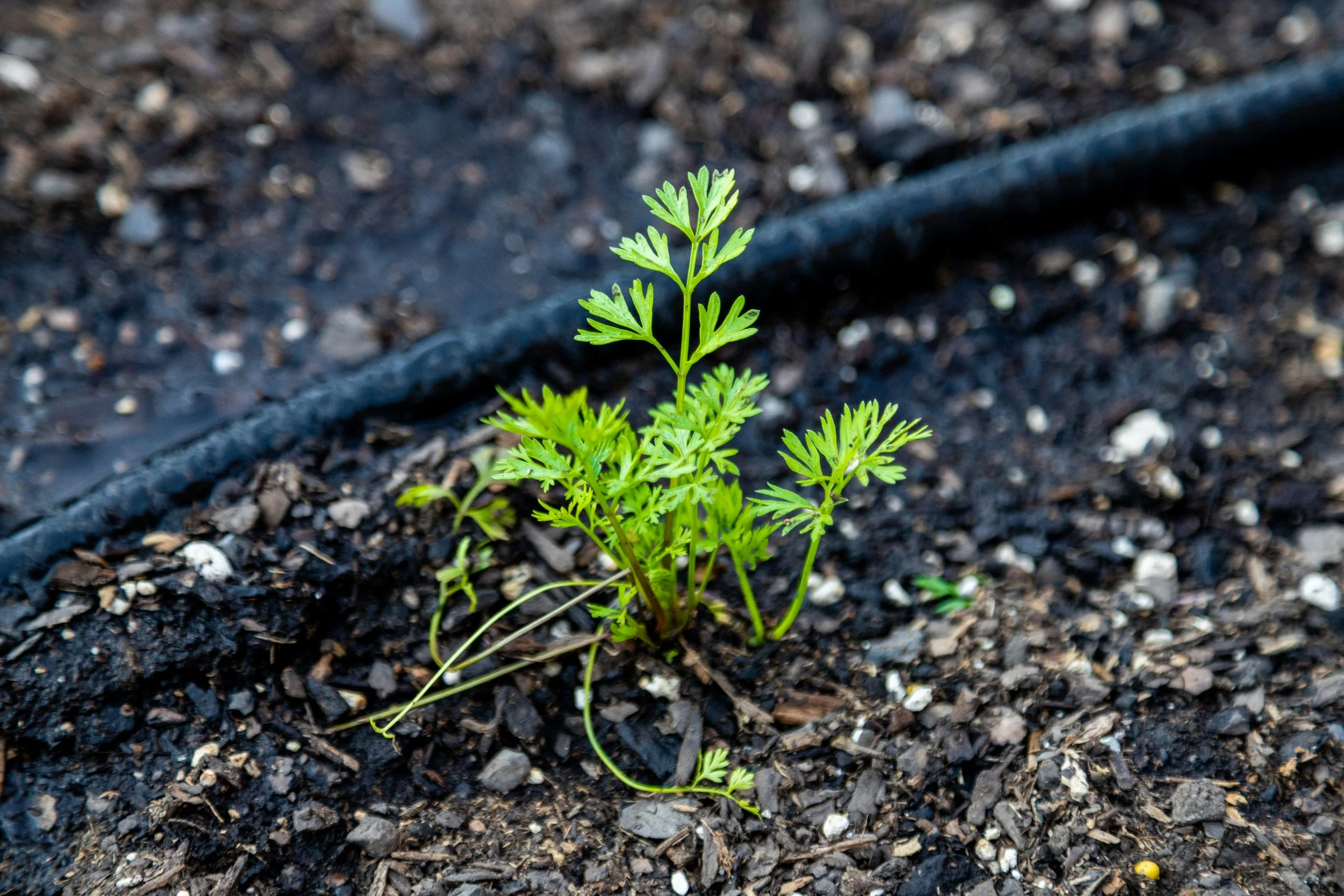
Newly installed drip irrigation pipe
In my next blog, I’ll run through a list of plants that are drought tolerant and are worth trying in your garden to cut down your watering time. If you live in Warwickshire and need help redesigning your garden to cope with the changing climate, please email info@hartgardendesign.co.uk or call 07494 046858.