
5 different flooring materials for your garden
In my last article, I talked through how to select the right paving stone for your garden. But of course paving slabs aren’t the only option to create seating areas and pathways in your garden. There are plenty of other materials on offer.
Decking
Natural wood decking can be beautiful and a great option for creating a level area in a sloping garden. Hardwood decking will last longer than softwood but there is maintenance required for both. There are some great composite decking (man-made) options to consider, which reduce your maintenance time. I personally would steer clear of cheaper plastic options and seek out those that replicate the look of natural wood instead. Millboard are a well known supplier but do shop around.
Good for: all styles of garden, sloped areas.
2. Self-binding gravel
I love this material. It is a very small gravel that is compacted to form a hard, firm surface. It is relatively low cost and and looks very natural, often with lovely golden tones that look fab in sunlight. As with all gravel surfaces, I wouldn’t recommend using it directly outside the house as its easy to tread some of the material inside.
Good for: natural gardens, cottage gardens, pathways, informal seating areas

Self-binding gravel used for pathways and a seating area in a Warwickshire garden.
3. Resin bound gravel
I’m slightly on the fence about resin - while I think it looks very smart, it is almost too perfect and I’m not sure it suits a garden setting. I’ve also noticed very light resin surfaces can stain if leaves / debris fall onto it. Having said that, it looks fabulous in the Cool Garden at RHS Rosemoor, forming permeable pathways that are wheelchair accessible. So I wouldn't discount it - maybe select your colour carefully and use it in a modern scheme in open, light sunny locations (i.e. not near to trees). Its a permeable material if laid correctly - check with your landscaper.
Good for: modern schemes, accessible pathways and seating areas.
4. Loose gravel
I design with gravel all the time - it’s relatively easy to install, natural looking with plenty of colour and size options. Select a larger gravel (20mm) for driveways and smaller sizes (e.g. 10mm) for pathways and informal seating areas. Make sure your landscaper prepares a good, permeable base to reduce weed growth - I installed a gravel pathway years ago and my relatives laughed at the size of the ‘trench’ I dug for my base but I haven’t had to weed it yet! Gravel isn’t a great surface for dining furniture so I recommend you use it for lounging / fire pit areas, making sure the furniture has broad bases that wont sink.
Good for: pathways in all styles of garden (size, shapes and colours to suit), informal seating areas.

Gravel pathway (Kenilworth, front garden)
5. Woodchip / bark
Wonderful for creating pathways in a woodland garden or very informal seating areas. Easy to install yourself - I would suggest digging down approx. 100mm to remove turf / weeds / plants. Add a couple of layers of cardboard at the base to reduce weed growth and then pile the wood chips on top to create your path. The wood chips will decompose over time and so will need to be topped up.
Good for: woodland pathways, woodland seating areas, play areas, veg plot pathways.
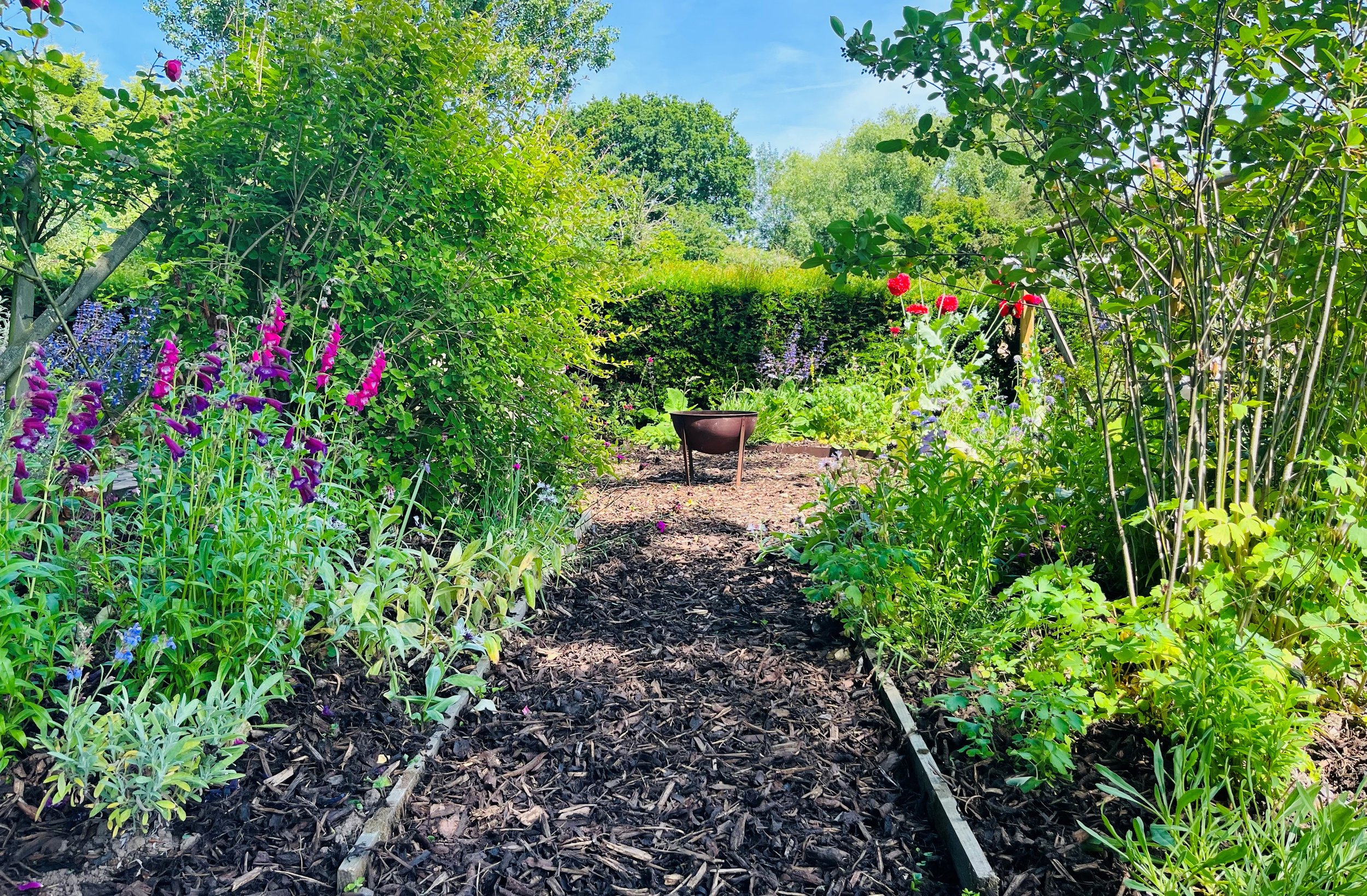
Woodchip pathway leading to informal fire pit seating area (Warwickshire)
Some things to think about:
Go and visit some suppliers to view the options, ask them for advice and for samples you can take home. You can often order samples of decking and gravel online.
A correctly prepared base is essential for most of the surfaces outlined above. Ask your landscaper to talk you through the decking frame to be used or the depth / permeability of the base for gravel surfaces etc. Resin bound gravel needs to be laid by someone with the correct training. If you are planning to create your garden yourself, I’ve found How To Create Your Garden by Adam Frost a useful book for straight forward hard landscaping advice.
You will need an edging material to contain gravel or woodchip (unless its a very natural woodland path and you allow the wood to spill into the borders). The edging material should tie in with the overall style of the garden - you might use cobbles in a cottage garden, tying in with stone used elsewhere, or wood boards to give a rustic feel. Metal edging is popular as it is relatively easy to install and hard wearing. It suits more modern styles but if you select black edging, it will be blend into the planting borders and will hardly be noticeable. Everedge is a well know supplier but again, shop around!